
Weather Notes
post-atmospheric river

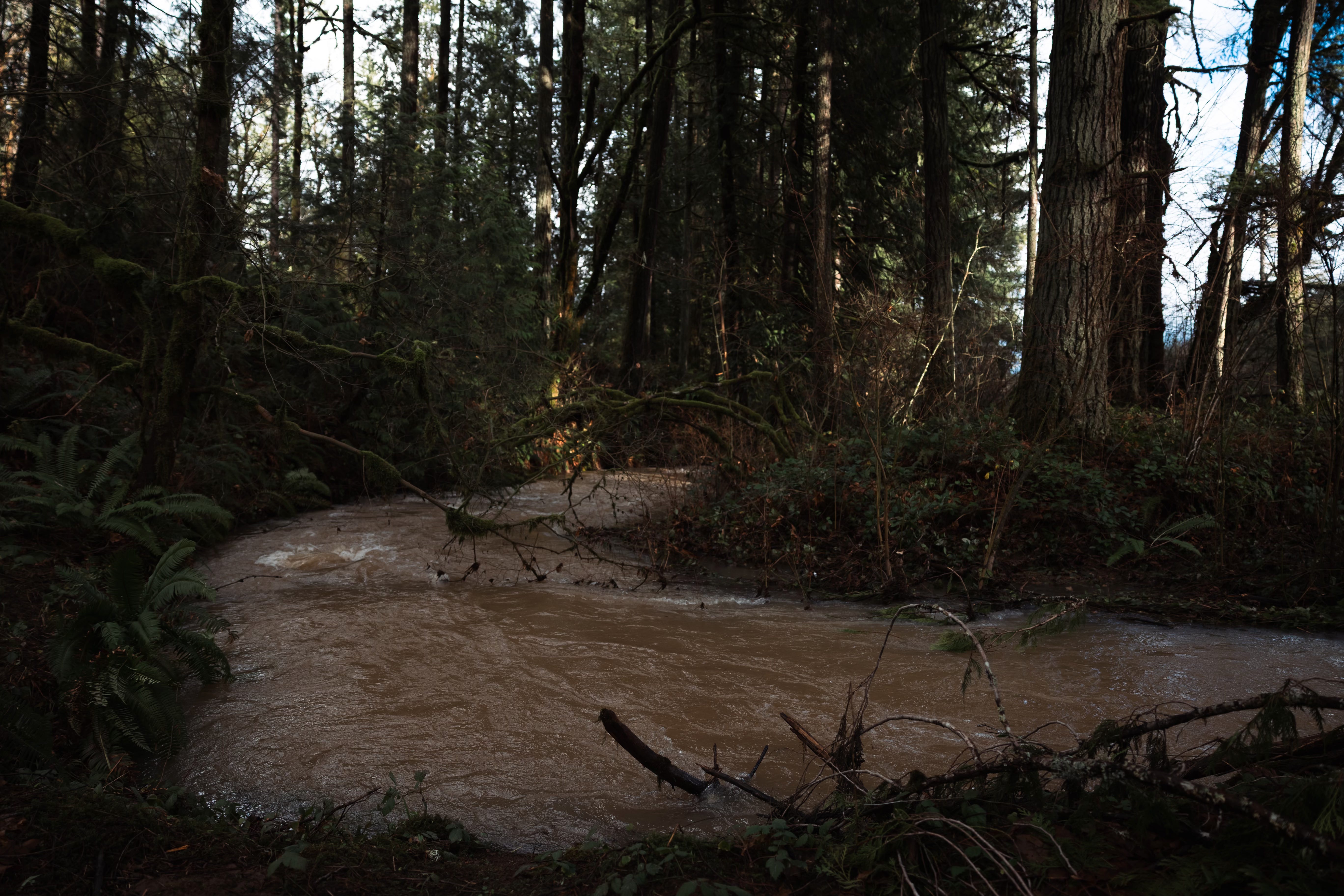
The sun is shining so deceptively through the window right now that you almost wouldn’t know it’s a sopping wet mess outside. The ditches, rivers, and creeks are full to bursting, and our main artery to town is closed due to landslides.
I went out at 2am last night to check on the damage. Our stretch of roadside ditch was overflowing from the sheer volume of water, and the creek that runs along the property couldn’t drain under the road fast enough to keep it from spilling over.
That said, we’re fine. The rain let up last night just as things were starting to get interesting, which means all of this becomes useful information for us going forward. Some folks in lower-lying areas weren’t so lucky.
We moved here two years ago and decided to log some of the cedar and fir on the property over the summer to help mitigate potential damage during extreme weather, namely wind, fire, and ice storms—all of which we’ve dealt with in the past five years. But with logging comes fresh roads cut into the hillside, increasing the likelihood of landslides here for the next decade or so. In some ways, it’s as if we’ve traded one potential issue for another.
I think there’s a lesson to be learned in this: by all means, plan and prepare and do what you can, but Mother Nature still wins when she really wants to. And often she’ll come to heckle you right in the middle of your Christmas party.
We humans tend to behave counterintuitively in emergency situations. We hem and haw before action can be taken. Is this a big deal? Do I really need to do something about this?
After some convincing, we’ll take those hesitant first steps. Maybe pack a bag or two, taking inventory of what we’ll need in a pinch. Maybe we’ll even load up the car. Baby steps in breaking through the inertia. It can be hard to think of all the things that need doing when you don’t already have a plan.
I find it’s in the aftermath of an emergency that we’re our most clear-headed. That’s when we can see what, if anything, we could have done differently. But this clarity is short-lived as our brain soothes the urgency, keeping us from staying stuck in loops of hypervigilance and stress.
But if we kept that awareness in mind a little longer, we might prioritize and plan differently. Maybe we’d teach ourselves a few more useful skills or put systems in place for next time—just in case. What’s the harm in having a bag packed, after all?
As the past five years have shown me, unexpected things do happen now and then, and I dislike feeling powerless and planless in such times. I’m unsatisfied with only thinking through how preventable issues could have been resolved after the fact.
So while I don’t consider myself a prepper, I do think it’s important to engage in realistic, grounded planning. To take photos and videos for future reference. To plan for infrastructure improvements, redundancies, and family coordination. To brainstorm and prepare as much as possible now, however boring and unglamorous, so our future selves aren’t so overburdened by decision fatigue when it matters most.
And even if things don’t go to plan, as they often don’t, it’s still a start—and it’s a whole lot better than nothing.
We didn’t get it as bad here in Eugene as you did. I’m glad to hear you and your family as mostly ok! Here’s hoping the road closure isn’t for too long. 🤞